Radha Pentland
Just DesertsRadha Pentland is one of the decisive formative figures in Elizabeth Bennet’s life: an Indian woman who survived kidnapping, attempted enslavement, piracy, a nearly fatal wound, forced religious confinement, and social condemnation, then built a dignified life with Sir David Pentland and helped turn Grenadine Reef into a place of recovery for women harmed by violence. Her significance lies not only in what she endured, but in what she made from it. She refused to let suffering become either a private shame or a public spectacle, and her example taught Elizabeth that a woman’s value could be expressed through judgment, estate management, practical charity, and purposeful independence rather than conformity to society’s gaze.
Identity and Early Life
Radha was born Radha Bhimani in Kutch in western India. Her mother died in childbirth, and she was raised by her paternal grandmother and aunts while her father served as a minor district-government official. Her childhood was shaped by repeated political and military upheaval: fighting involving the Mughals, the Marathas, and the British forced her family to move between safety and displacement. Because her Hindu family lived in a district conquered by Muslim rulers, they fled, returned after their defeat, and then faced the arrival of British power. Radha’s memories of the sequence had become fragmented, but the instability established a pattern that would continue throughout her life: belonging was repeatedly interrupted by forces larger than herself.
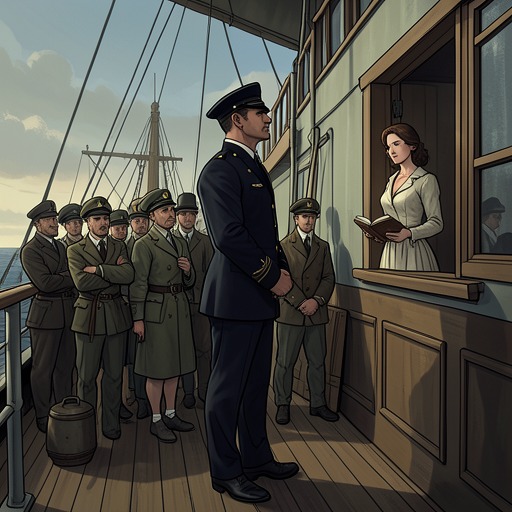
When Radha was only a year older than Elizabeth was when they first met, she was kidnapped to be sold into slavery. She was rescued before the sale, but rescue did not restore her freedom or return her to India. A Spanish ship recovered her off the coast of the Arabian Peninsula while transporting priests; the priests taught her rudimentary Spanish, and the price of safety was her forced entry into a nunnery outside Cadiz. For six years she lived in confinement. At twenty-one, she was selected, without being given a choice, to join a mission to South America. In the spring of 1772, she sailed from Cadiz toward Cartagena on the Spanish Main with twenty-nine other members of her order.
Captivity, Injury, and Rescue
The mission ship was captured by pirates, and Radha endured four days in their power. She described that period to Elizabeth only as a very grim time, a restrained phrase whose full meaning Elizabeth understood only years later. Radha was stabbed in the womb and suffered an infection that took more than two months to overcome. She was read the last rites because wounds of that kind were considered nearly uniformly fatal, yet she continued to live. The rest of the surviving order was landed under a white flag of neutrality and proceeded onward, while Radha was left behind because she was too ill to be moved.
Sir David Pentland brought her to his large house in Bridgetown, Barbados, where his housekeeper and a nurse helped care for her. She nearly died twice even under that personal care, but eventually fought off the final infection. Her condition placed several identities in tension: she was an Indian woman who spoke Spanish, a forced nun abandoned by her order, a piracy survivor, and a patient dependent upon a British naval hero. The narrative makes her survival an act of persistence rather than a simple conclusion to a rescue. The rescue removed her from immediate danger, but it did not remove the structures that would continue to judge her for having been endangered.
Marriage to Sir David and Life at Grenadine Reef
After eleven weeks had passed since the capture of the original ship, Radha moved to the home of a widow known to Sir David for the sake of propriety, and Sir David began to court her. She told him enough about the four days before her rescue to make the nature of her ordeal clear. He took her hand and told her that it did not matter. Their relationship therefore begins not with an erasure of Radha’s past, but with Sir David’s refusal to treat violence done to her as a stain upon her worth.
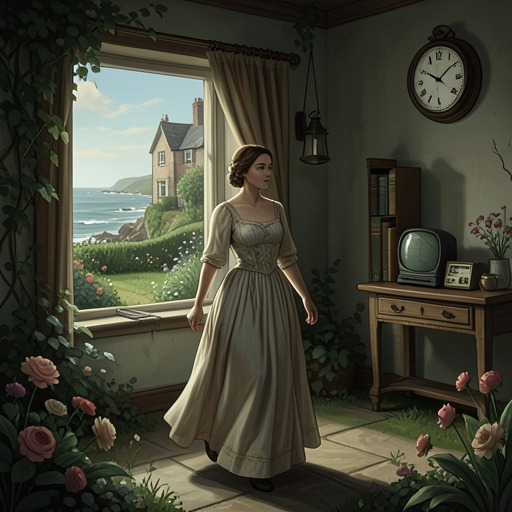
Radha had survived years of crimes, and the social response on Barbados was itself another form of punishment. Once it became clear that she would live, she heard repeated comments that it would have been better if she had died. She was shunned for circumstances over which she had no control, as though living near the coast had been her original sin. The hostility affected Sir David as well. He had already been uncertain about continuing his naval career, and the treatment of Radha became the last straw: he resigned his commission, returned with her to Britain, and married her in his home town outside Edinburgh after Radha willingly, though superficially, converted to the Church of Scotland. Following their wedding journey, they moved to London, acquired the estate later known as Grenadine Reef, and lived there for the rest of their married life. At the time of Elizabeth’s recollection, their life at the estate had lasted thirty-two years; Sir David later described their marriage as thirty-five years of happily ever after.
The marriage is presented as unusually durable because it is based on recognition rather than social convenience. Sir David’s protection is not merely a rescue gesture: he changes his career, accepts Radha’s history, and joins her in creating a household organized around humane responsibility. Radha, meanwhile, becomes Mistress of an estate without trying to imitate the spending or display expected of fashionable women. She and Sir David live modestly but very comfortably, maintain a well-run property, and direct their resources toward people in need.
Influence on Elizabeth and the Women’s Refuge
Elizabeth first met Radha in 1804, when she escaped the preparations for Jane Bennet’s social debut. To avoid being seen from the parlour at Longbourn, Elizabeth abandoned her usual eastern walk toward Oakham Mount and went north instead, meeting Radha by a stream. Radha invited her into the Pentlands’ world rather than dismissing her as a child. For the first two and a half years Elizabeth addressed her as Lady Pentland; on Elizabeth’s sixteenth birthday, Radha asked her to use the more intimate name Lady Radha, which Elizabeth continued to use in memory.
Radha became a teacher through conversation, example, and repeated practical experience. Elizabeth learned from her visits to tenants at Grenadine Reef and carried those lessons back to the visits she made with Jane Bennet at Longbourn. The education concerned the daily responsibilities of estate ownership: the welfare of tenants belonged to the master or mistress of the estate, and effective care required attention to innumerable small matters rather than abstract benevolence. Elizabeth later contrasted Radha with Madeline Gardiner: the two women differed in background, fertility, public social activity, and household circumstances, yet both taught her that being a gentle-born lady was grounded in love and the practical realities of living responsibly.
Radha’s injuries prevented her from bearing children, and she and Sir David were rarely active in society. Instead of treating childlessness and social withdrawal as failures, they gave Grenadine Reef a wider purpose. After Radha’s death, Elizabeth explained that the estate’s refuge had been established for servant women and tradesmen’s daughters who had suffered abuse or sexual violence. The women were allowed to recover in peace and safety before rebuilding their lives. Some emigrated to Canada to put distance between themselves and their pasts; some changed their names, and no two stories were identical. The Harkness sisters, Vivian Harkness and Violet Harkness, were part of the permanent staff: Violet needed refuge, while Vivian came to support her recovery. Later they served as Elizabeth’s drivers and chaperones on the estate.
Radha’s purpose as Mistress of Grenadine Reef thus reverses the social logic that had condemned her. Society had treated her survival as an embarrassment, but she made survival materially possible for others. The refuge does not pretend that every past can be repaired or that all women will return to their former homes. It offers time, safety, and choice, allowing recovery and emigration alike to become legitimate forms of rebuilding.
Memory, Legacy, and Narrative Role
Radha died before the later revelations through which Elizabeth fully interpreted their relationship, but her presence governs the book long after her death. Elizabeth repeatedly reconstructs the past with an older understanding, recognizing that as a thirteen-year-old she had heard facts without grasping their social subtext. Radha’s phrase about Barbados, and her restrained description of the pirates, acquire their full force retrospectively. The narrative therefore makes Radha both a character in remembered scenes and the center of an analeptic moral education: the reader first encounters fragments, then understands how violence, gossip, and institutional power were connected.
Elizabeth regards Radha with such reverence that Sir David worries she has placed both Pentlands on excessively high pedestals. Yet Radha is not reduced to an emblem of suffering. Her reticence, her insistence on protecting Elizabeth’s innocence, her practical estate work, and her refusal to spend hundreds on clothes merely to conform show a woman choosing what her life will mean. Her marriage to Sir David is a partnership, but her identity is not absorbed into his title or heroism. Elizabeth later distinguishes the true Lady Pentland, who was married to Sir David for thirty-five years, from Elizabeth’s own brief marriage to him, which lasted barely thirty-five hours. In that distinction, Elizabeth preserves Radha’s singular place rather than claiming it.
Radha’s influence also shapes Elizabeth’s understanding of love and marriage. Before meeting her, Elizabeth assumed that she would eventually marry without knowing to whom or under what circumstances, though even at twelve she believed she would marry only for the deepest love. Over the next five years, seeing Radha and Sir David together led her to imagine that she might never marry at all; she found fulfillment in learning estate management and investments, activities young women were not expected to understand, much less perform. Her later relationship with Fitzwilliam Darcy is measured against the example Radha provided: love must accommodate an unconventional woman’s intelligence, authority, and refusal to become smaller for social approval.
Radha’s life is finally rendered as one of the bricks in the wall of Elizabeth’s destiny. Elizabeth’s attempt to evade Mrs. Bennet’s plans, the altered walking route, the chance meeting by the stream, Radha’s invitation into the Pentland household, and the succession of later encounters all become connected in retrospect. Her legacy is therefore both institutional and intimate: Grenadine Reef shelters women whose lives have been damaged by violence, while Radha’s memory gives Elizabeth a model of courage, self-command, compassionate management, and love that does not require innocence about the world.